
The Business Coalition is asking governments to agree on five core obligations, underpinned by harmonised regulations across the full lifecycle of plastics, and to establish the COP architecture to strengthen them over time.
An ambitious, effective and legally binding treaty on plastic pollution is within reach. This roadmap sets out the five core obligations for governments to agree across the full lifecycle of plastics, complemented by Conference of the Parties (COP) mandates to strengthen them over time. The Business Coalition stands ready to work with policymakers on each.



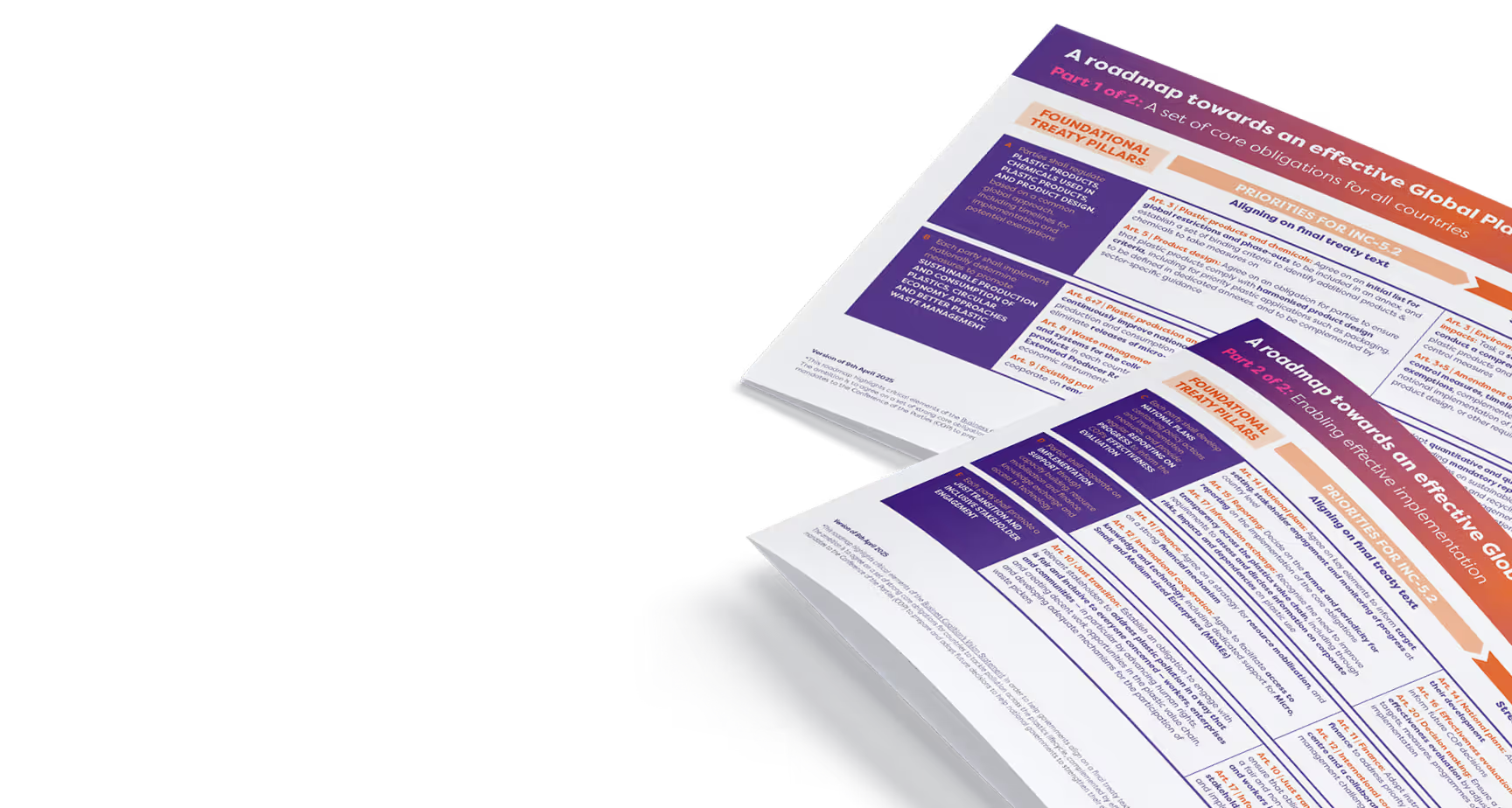
The treaty must retain the full lifecycle approach of UNEA resolution 5/14, covering production, consumption, product design, waste management and existing pollution. Member States need to agree on the COP mandates that allow control measures, technical specifications, quantitative targets and financial instruments to be adopted and strengthened over time. This is the structure that delivers consistency across borders with enough flexibility to support national ambitions.
We, +330 businesses from across the plastics value chain, financial institutions and NGOs, stand ready to share further insights and recommendations to inform the INC discussions on the following:

February 2, 2026
Harmonised regulations across the entire value chain can further mobilise investment, scale solutions, and spark innovation.
December 9, 2025
Despite challenges in the negotiation process, there is growing alignment and urgency to conclude an effective global plastics treaty to drive harmonised regulations to end plastic pollution.
August 15, 2025
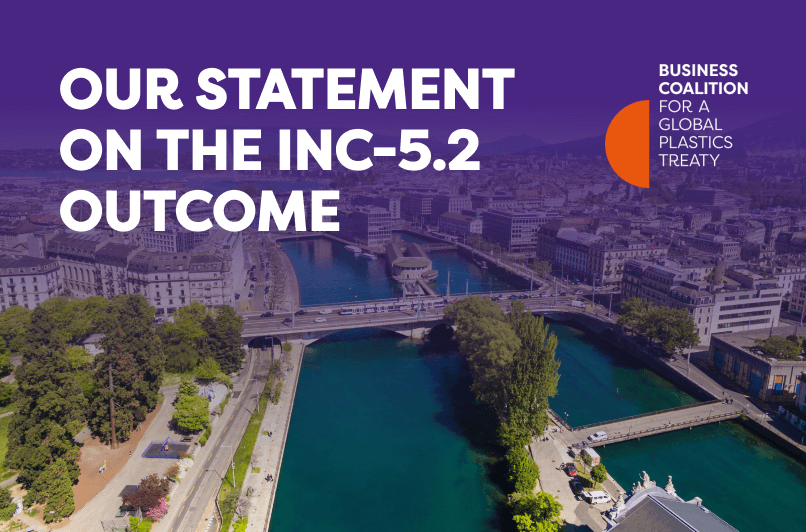
Despite tireless efforts by the INC Chair and government negotiators to finalise a global treaty addressing the full lifecycle of plastics, it has not been agreed during INC 5.2 in Geneva.

June 5, 2025
A global treaty with a harmonised approach is the most effective way to tackle plastic pollution and unlock greater value for businesses, our countries and our communities.
